

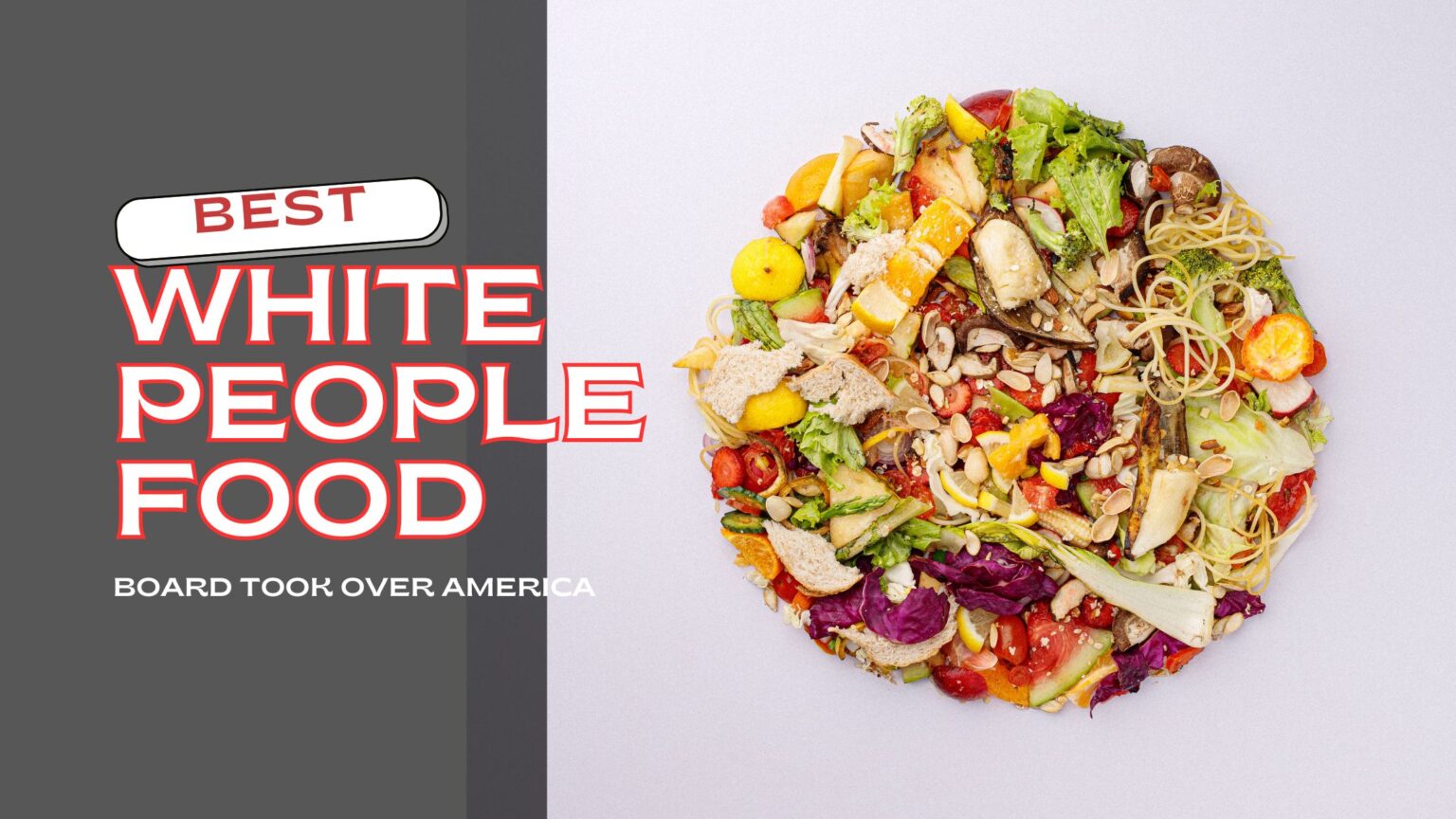

Every food culture has a dish that says more about its people than its ingredients. For white people food, that dish is the charcuterie board.
Twenty years ago, a party snack table looked simple. A block of cheddar. A sleeve of crackers. Maybe some pepperoni if the host was feeling bold. Today, that same table holds a wooden board covered in fanned prosciutto, five kinds of cheese, and a sprig of rosemary that nobody eats. Something changed. And that change tells a bigger story about how white people food learned to dress up for the camera.
This article breaks down exactly how the humble cheese plate became a full-blown cultural moment. You will learn where the trend came from, why social media supercharged it, what is actually inside a “proper” board, and how to build one yourself without spending a fortune. Whether you are new to the charcuterie world or you already own three wooden boards, there is something here for you.
What Is Charcuterie, Really?
Before we talk trends, let’s clear up the word itself.
Charcuterie comes from French. It combines chair (flesh) and cuit (cooked), and it originally referred only to prepared meats like sausage, pâté, and cured ham. Charcuterie is a branch of French cuisine devoted to prepared meat products, such as bacon, ham, sausage, terrines, and pâtés, primarily from pork. In France, it is a serious culinary trade with formal training behind it.
In the United States, the word took on a much broader meaning. Charcuterie boards have become popular as appetizers or party snacks in the United States in recent years, and the term now covers the whole spread meats, cheeses, crackers, fruit, and spreads arranged together on a board.
That shift matters. It shows how white people food often borrows a foreign culinary idea, simplifies it, and turns it into something new. The result is not exactly French charcuterie. It is an American invention wearing a French name.
It also helps to understand the original purpose of charcuterie. Long before refrigerators existed, salting, smoking, and curing meat were survival skills, not aesthetic choices. Families needed a way to preserve pork through winter, and those preservation methods happened to create rich, deeply flavored meats along the way. Modern charcuterie boards keep the flavors but lose almost all of that original context. Few people building a board at home today are thinking about food preservation. They are thinking about how the spread will look once it is arranged and photographed.
This gap between the original meaning and the modern use is worth sitting with for a moment. It is a pattern you see across a lot of white people food: borrow a word, keep the appealing parts, and quietly drop the harder history behind it. Understanding that gap makes the rest of this story easier to follow.
From Cheese Plate to Cultural Flex: A Short History
Let’s rewind to the cheese-and-crackers plate of the 1990s and early 2000s. This was not styled. It was not “curated.” It was a paper plate with cheddar cubes and a box of Ritz crackers, usually sitting next to the veggie tray at every family gathering.
Somewhere along the way, that plate got a serious upgrade. A few things pushed this shift forward:
- Rising interest in “elevated” home entertaining. Cooking shows and food blogs made home hosts want to impress guests, not just feed them.
- European food culture going mainstream. Words like “artisan,” “small-batch,” and “charcuterie” became common in American grocery stores.
- A new visual food culture. As photos of food became part of everyday social life, presentation started to matter as much as taste.
By the early 2010s, the plain cheese plate had transformed into something with a name, a purpose, and a price tag. What used to be background food at a party became the main event.
Restaurants played a role too. Wine bars and gastropubs began putting “charcuterie” on their menus, often charging a premium for a small selection of cured meats and cheeses that would have cost a fraction as much at a grocery store. That restaurant framing taught home cooks a new lesson: this style of food was worth paying more for, and worth taking seriously. Once that idea took hold, it was only a matter of time before people started recreating the experience at home, then improving on it.
Cookbook publishers noticed the shift as well. Guides dedicated entirely to board-building sometimes called “board books” started appearing on bestseller lists, walking readers through everything from meat-to-cheese ratios to color theory for grapes and olives. What had been an afterthought snack now had its own publishing category. That is a strong sign a trend has moved from passing fad to genuine cultural fixture.
Social Media Did This: The Instagram Effect on White People Food
If you want one single reason the charcuterie board exploded, look at Instagram.
A charcuterie board is close to perfect content. It has color. It has texture. It photographs beautifully from directly above, which happens to be the most popular angle in food photography the “flat lay.” Unlike a bowl of soup, a board loses nothing when shot from overhead. The arrangement is the point.
This visual appeal created a new kind of internet personality: the board stylist. Entire accounts built their following around styling tips, like:
- Using odd numbers of cheese for visual balance
- Fanning meats into ribbons or roses
- Filling gaps with grapes, nuts, or olives
- Adding one “wow” item in the center, such as a wheel of baked brie
This is where white people food and internet culture really merged. A snack became a skill. A skill became content. And content became a business.
Pinterest deserves credit here too. Long before Instagram fully took over the food space, Pinterest boards (no pun intended) full of styled charcuterie spreads were already circulating among home entertainers. Pinterest’s format searchable, saveable, endlessly scrollable made it easy for the same handful of “rules” to spread quickly: use odd numbers, add height with small bowls, always include something sweet next to something salty. Those rules eventually became so widely repeated that they started to feel like established fact rather than trend advice.
YouTube added another layer with long-form tutorials. Where Instagram gave people the finished, glossy result, YouTube gave them step-by-step videos showing exactly how to fold prosciutto into roses or fan out salami into a fan shape. This combination a platform for inspiration and a platform for instruction is part of why the skill spread so quickly across the country. Within a few years, board-building went from a niche hobby among serious home entertainers to something the average person felt comfortable attempting for a Tuesday night dinner.
The Pandemic Grazing Table Boom
Instagram built the audience. The pandemic built the obsession.
When the world shut down in 2020, restaurants closed and people were stuck at home. Around that same time, the charcuterie board leveled up again from a single board to full “grazing tables” that covered an entire dining surface edge to edge.
A few reasons explain the timing:
- Boredom met creativity. With nowhere to go, building an elaborate spread became a project, not just a snack.
- People missed dining out. A styled grazing table brought some of that “special night” feeling back home.
- It felt lower-risk. Individually sliced meats and pre-packaged cheese felt safer than a shared casserole dish during a health crisis.
This period also gave rise to charcuterie side hustles. Small business owners began building custom boards and grazing tables for birthdays, anniversaries, and holidays, sometimes charging well over $100 for a single spread. A snack turned into an income stream almost overnight.
Local Facebook groups and neighborhood apps filled up with ads for “charcuterie boxes,” often delivered right to the door in disposable containers designed to look upscale despite being single-use. Some of these businesses grew large enough to hire employees and rent commercial kitchen space, all built around arranging meat and cheese attractively. It is a genuinely remarkable example of how quickly a home trend can turn into a real, if small, corner of the American food economy.
Even grocery stores adjusted. Pre-made charcuterie kits, complete with small compartments for meat, cheese, and crackers, started showing up in refrigerated sections nationwide, letting time-pressed shoppers buy the “look” of a homemade board without doing any of the arranging themselves. That convenience option alone tells you how mainstream the trend had become by the middle of the decade.
What’s Actually on a Charcuterie Board?
For all the hype, the ingredient list has not changed that much. Most boards follow the same basic formula:
- Cured meats salami, prosciutto, soppressata
- Cheese usually one soft, one hard, and one “fun name” cheese like Manchego
- Crackers or bread often an artisan cracker or sliced baguette
- Something sweet honey, fig jam, or dried fruit
- Fillers grapes, nuts, olives, and pickles
And, of course, the rosemary sprig. It adds almost no flavor. It exists purely for the photo.
Here is a quick side-by-side comparison to show how far the “glow-up” really goes:
| Feature | Classic Cheese Plate | Modern Charcuterie Board |
| Meat | Sliced deli turkey | Prosciutto, salami, soppressata |
| Cheese | One block of cheddar | 3–5 varieties |
| Crackers | Ritz or saltines | Artisan crackers, baguette slices |
| Extras | None | Honey, jam, nuts, dried fruit |
| Presentation | Paper plate | Wooden board or slate |
| Effort | 5 minutes | 30–45 minutes |
Same basic idea. Bigger price tag. That is the glow-up in one table.
Is a Charcuterie Board Actually Healthy?
It is worth addressing a question that comes up often: how healthy is a charcuterie board, really?
The honest answer is mixed. Cured meats tend to be high in sodium and saturated fat, and heavy cheese portions add even more of both. On the other hand, a board built with intention can lean in a lighter direction. Swapping in more fresh fruit, raw vegetables, and nuts, while trimming back the amount of processed meat, turns the same format into a genuinely balanced snack option.
A few simple swaps can make a real difference:
- Choose leaner cured meats, like turkey or a lower-sodium prosciutto, over heavily processed options
- Add more fresh produce, such as cucumber slices, cherry tomatoes, or apple wedges
- Use nuts and seeds for healthy fats instead of extra cheese
- Offer whole-grain crackers alongside (or instead of) refined white ones
- Keep portions in mind, since it is easy to graze far past a normal serving size on a spread this visually tempting
None of this makes a charcuterie board a health food. But it does show that the format itself is flexible. The same “arrange it nicely” idea that built the trend can just as easily support a lighter, more balanced spread as it can support an indulgent one.
Regional Twists on the Classic Board
While the core formula stays fairly consistent across the country, different regions have put their own spin on the charcuterie board, which says a lot about how local food culture shapes even a trend as standardized as this one.
- The South often leans into pimento cheese, boiled peanuts, and pepper jelly alongside the standard cured meats.
- The Midwest sometimes swaps in local cheese curds or summer sausage, a nod to the region’s dairy and meat-processing history.
- The Pacific Northwest frequently features smoked salmon in place of, or alongside, cured pork.
- The Southwest occasionally adds jalapeño-studded cheeses, chorizo, and dried chiles for a spicier profile.
- Coastal New England sometimes works in local cheeses and cranberry-based jams instead of fig or apricot.
These regional twists prove something important: even a trend built almost entirely around aesthetics and social media still gets filtered through local taste and tradition. It’s not a single, uniform food across the country it’s a flexible format that absorbs whatever regional flavor gets thrown at it.
Why This Feels Like Peak White People Food
Charcuterie sits at a very specific cultural intersection: aspirational hosting, suburban Pinterest culture, and a curated kind of effortlessness.
Building a board says something. It signals time, taste, and a bit of disposable income. That’s part of why it became the go-to spread for wine nights, book clubs, bridal showers, and neighborhood get-togethers across the country.
Here’s the honest truth about white people food in general: a lot of what gets labeled “fancy” is really just a simple dish with better styling. A charcuterie board is not a complicated dish to cook. There is no cooking at all. It is meat, cheese, and crackers arranged with intention. The skill is presentation, not preparation and that’s exactly why it fits so well into the broader white people food conversation.
If you enjoyed this cultural breakdown, you might also like our related piece on the rise of casserole culture at American potlucks or our full white people food starter pack guide.
The Backlash: Memes, Jokes, and the $40 Cheese Plate
Naturally, the internet noticed the trend and started roasting it.
TikTok and Twitter are full of jokes calling out the seriousness of “board composition,” and plenty of creators have pointed out the gap between the actual cost of ingredients and what some sellers charge for a styled board. The joke lands because it is often true you can build a similar spread yourself for a fraction of what a professional charges.
There is a real contradiction here, and it’s a very white people food kind of contradiction. People mock the trend online, then build one for their own party that same weekend. It’s simultaneously a joke and a genuine favorite. Few food trends manage to hold both at once quite like this one.
Part of what fuels the joke economy is how easily the trend lends itself to parody. Comedians and everyday creators alike have built entire skits around exaggerated board vocabulary “curating a grazing experience,” “sourcing artisanal accoutrements” poking fun at how much language has been layered onto what is, at its core, a plate of cold cuts. The humor works because most people watching have either built a board themselves or attended a party where one took center stage. It’s a shared cultural reference point, which is exactly why it spreads so easily online.
There’s also a class-conscious edge to some of the criticism. Critics have pointed out that charging a premium for “curated” meat and cheese, while framing it as a sophisticated culinary skill, echoes a broader pattern in food culture: dressing up affordable ingredients and charging aspirational prices once the presentation changes. That criticism doesn’t necessarily kill the trend’s popularity, but it does add a layer of self-awareness to how people talk about it online.
Where the Charcuterie Trend Is Headed Next
Trends never stay still for long, and charcuterie boards are already evolving.
- Mini charcuterie cups individually portioned servings, popular at weddings and larger events
- Themed boards dessert boards, breakfast boards, and even taco boards
- Board-ification of everything the same “arrange it nicely on a flat surface” format is now applied to almost any meal
Will the word “charcuterie” itself start to feel dated? Possibly. But the instinct behind it turning food into something visual and shareable is not going away. It will likely just find a new name and a new format.
There’s also a growing interest in sustainability and sourcing, with some hosts now prioritizing local cheesemakers and small-batch producers over mass-market brands. This shift mirrors a broader movement in American food culture toward knowing where ingredients come from, and it gives the charcuterie board a slightly more thoughtful angle than its meme-heavy reputation might suggest. A board built entirely from local, small-producer ingredients tells a very different story than one assembled from the nearest big-box grocery store, even if the final arrangement looks similar on camera.
Some event planners have also started experimenting with charcuterie as a full meal course rather than an appetizer, building multi-tiered stands or extended tables meant to replace a traditional sit-down dinner entirely. Whether that becomes a lasting shift or just another creative variation remains to be seen, but it shows the format still has room to expand well beyond its original “snack before the meal” role.
How to Build a Solid Charcuterie Board Without Overdoing It
You do not need a $60 walnut board or a culinary degree to pull this off. Here are some simple, practical tips:
- Pick a ratio. Two meats, three cheeses, one or two crackers, and a couple of extras is plenty.
- Choose contrasting cheeses. One soft, one hard, one in between keeps the board balanced.
- Buy pre-sliced when possible. It saves time and looks just as good once arranged.
- Work in clusters, not rows. Group cheeses together, fan meats in a loose curve, and scatter fillers into the gaps.
- Use what you have. A clean cutting board works fine. Nobody is checking the wood grain.
- Add the rosemary sprig if you want. It is optional, but it does complete the look.
- Think about dietary needs ahead of time. A small section with gluten-free crackers or dairy-free options keeps more guests included without much extra effort.
- Build in layers. Place bowls and jars first, then work the meats and cheeses around them, and finish by scattering the smaller fillers like nuts and berries into any remaining gaps.
- Leave a little breathing room. A board that’s slightly too full looks cluttered in photos. Leaving small gaps of empty space actually makes the arrangement look more intentional, not less.
- Prep components the night before. Slicing cheese and portioning nuts ahead of time turns assembly into a five-minute job instead of a rushed, last-minute scramble.
None of these tips require special training. They’re really just small habits that add up to a spread that looks far more polished than the effort it actually took.
If you’re serving a board at a party, it’s also worth following basic food safety steps. According to the USDA’s Food Safety and Inspection Service, cold perishable food, such as a platter of deli meats, should be kept at 40°F or below, and perishable foods should not be left out more than two hours, or one hour if the temperature is above 90°F. This matters more than most hosts realize, especially for outdoor summer gatherings.
Frequently Asked Questions About Charcuterie Boards and White People Food
Is a charcuterie board considered “white people food”? Yes, it’s often grouped into the “white people food” category online because of its association with suburban entertaining, wine nights, and Pinterest-style hosting culture. That said, people from every background enjoy and build these boards.
What is the difference between a cheese plate and a charcuterie board? A cheese plate usually focuses only on cheese and crackers. A charcuterie board includes cured meats, cheese, crackers, and extras like fruit, nuts, and honey, arranged together on a larger surface.
How much does a charcuterie board usually cost to make? A basic board for four to six people typically costs between $25 and $50 in ingredients, depending on the meats and cheeses chosen. Professionally styled boards or grazing tables can run much higher.
How long can a charcuterie board sit out safely? Follow the USDA’s two-hour rule. Perishable meats and cheeses should not sit at room temperature for more than two hours, or one hour if it’s above 90°F outside.
What is the best board size for a small gathering? For four to six people, a board around 12 to 16 inches works well. Larger gatherings may need a full grazing table instead of a single board.
Why did charcuterie boards become so popular during the pandemic? Lockdowns gave people time for hands-on projects, restaurant closures created demand for at-home “special occasion” food, and pre-sliced, individually portioned items felt lower-risk during a health crisis.
Can you make a charcuterie board ahead of time? Yes, but timing matters. Cheese and meat can be sliced and stored in the fridge a day ahead, while the final arrangement on the board is best done within an hour or two of serving so everything stays fresh and visually appealing. Add crackers last, since they can soften if placed too early.
What can I use instead of a wooden board? A large plate, a slate tile, a marble slab, or even a clean baking sheet lined with parchment paper all work well. The ingredients matter far more than the surface they sit on.
Final Thoughts
The charcuterie board is a perfect case study in how white people food evolves. Take a simple dish, borrow a fancy word, add better lighting, and suddenly a snack becomes a statement. It’s been mocked, memed, and endlessly discussed online and it’s still showing up at parties every single weekend.
Whether you see it as an aspirational hosting flex or just a Lunchable with better branding, there’s no denying its staying power. If you’re planning your next gathering, don’t overthink it. A clean board, a few good cheeses, and a little creativity will get you further than any $60 walnut board ever could.