



Belgian food has a reputation problem. Say “Belgian cuisine” and most people picture puff pastry vol-au-vents, whole pots of mussels, or waffles that supposedly need yeast dough and a professional iron. It sounds like restaurant work.
It mostly isn’t.
Strip away the fancy plating and Belgian home cooking is built on the same short list of ingredients over and over: potatoes, beer, cream, eggs, endive, and good butter. Once you’ve made one stew, one waffle, and one gratin, you’ll notice the same techniques repeating across the whole cuisine.
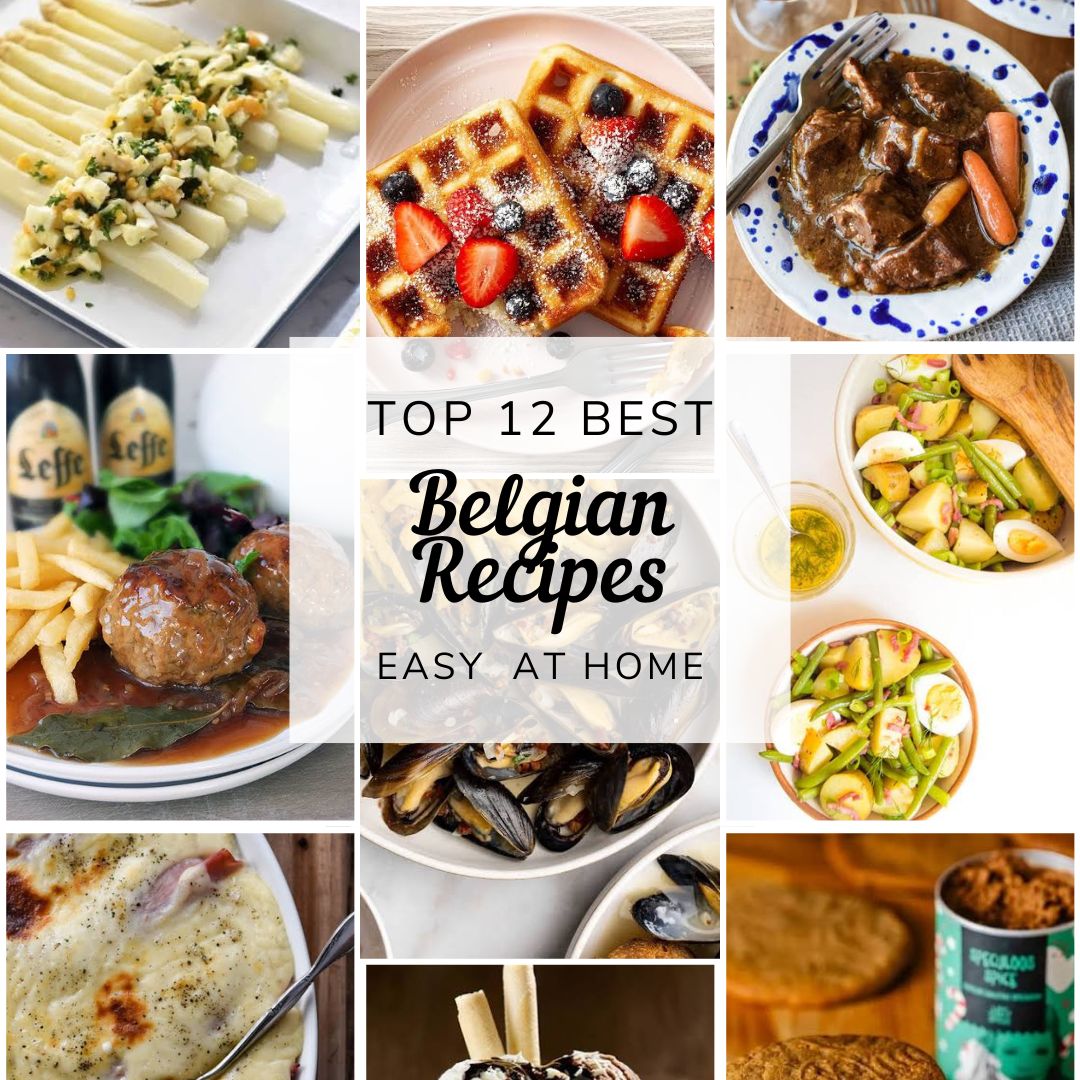
This guide covers 12 easy Belgian recipes at home that don’t require special equipment or hard-to-find ingredients, plus the parts most recipe roundups skip entirely how to handle mussels safely, the mistakes that ruin waffles and fries, and what to substitute when you can’t find something at your local grocery store.
What Makes Belgian Cooking Different (And Why It’s Easier Than It Looks)
Belgian cuisine sits at a crossroads. It borrows French technique, German heartiness, and Dutch simplicity, then adds two ingredients most other cuisines don’t lean on nearly as hard: beer and mayonnaise.
Belgium isn’t just a beer-drinking country beer culture there was formally recognized by UNESCO as part of the Intangible Cultural Heritage of Humanity in 2016, and the country produces close to 1,500 different beer varieties, according to UNESCO’s own listing. That matters in the kitchen because beer isn’t just a drink here; it’s a cooking liquid, used the way French cooking uses wine.
Common ingredients you’ll reuse across recipes
- Potatoes for fries, mash, and salads
- Belgian endive (witloof/chicon) bitter, white-leafed chicory, not the leafy green endive lettuce
- Dark or amber beer for stews and sauces
- Heavy cream and eggs for waterzooi, sauces, and waffle batter
- Butter used generously, not sparingly
- Mussels seasonal, cheap in Belgium, and central to the country’s best-known dish
- Nutmeg and bay leaf the two spices that show up in nearly every savory dish
Equipment you actually need
A Belgian waffle maker helps, but it’s not mandatory a standard waffle iron with deep pockets works fine for most home versions. Beyond that, this list needs nothing you don’t already own: a Dutch oven or heavy pot for stews, a large pot for mussels, and a sharp knife.
Easy Belgian Recipes at Home to Start With
Each recipe below includes a difficulty level, rough time commitment, and one practical tip most recipe sites leave out.
1. Belgian Waffles
Difficulty: Easy | Time: 30–40 minutes
There are two distinct styles, and mixing them up is the most common source of confusion online.
| Brussels Waffle | Liège Waffle | |
| Shape | Rectangular, light, airy | Irregular, denser |
| Batter | Thin, poured batter | Thick, yeasted dough |
| Sugar | Dusted on top (powdered) | Pearl sugar baked inside |
| Texture | Crisp outside, light inside | Chewy, caramelized edges |
For an easy version, make the Brussels style: whisk flour, sugar, baking powder, and salt in one bowl; whip egg whites to stiff peaks separately; combine milk, melted butter, egg yolks, and vanilla; fold everything together gently. The whipped egg whites not yeast are what give homemade Belgian waffles their lift. That’s why “easy” and “authentic” aren’t actually in conflict here.
Practical tip: Don’t overmix once the egg whites go in. Overmixing collapses the air you just worked to build, and you’ll get flat, dense waffles instead of the deep-pocketed, airy texture Belgian waffles are known for.
2. Moules-Frites (Mussels and Fries)
Difficulty: Moderate | Time: 45 minutes
Moules-frites mussels steamed in white wine, shallots, celery, and butter, served with a side of fries is widely considered Belgium’s national dish, though the exact origin of the pairing is disputed and probably dates to the early 20th century rather than any single inventor.
Basic method: sauté shallots, celery, and garlic in butter, add mussels and white wine, cover, and steam for 4–6 minutes until the shells open. Serve with fries and a side of mayonnaise for dipping that’s the actual Belgian custom, not ketchup.
See the dedicated safety section below before you cook this one. Mussels are the one ingredient in this list where a mistake has real consequences, not just a bad-tasting result.
3. Carbonnade Flamande (Beer-Braised Beef Stew)
Difficulty: Easy, but slow | Time: 2.5–3 hours (mostly hands-off)
Also called Vlaamse stoverij, this is Belgium’s answer to French boeuf bourguignon except beer replaces the wine. Beef chuck is browned, then braised low and slow with onions, a dark Belgian ale, a slice of bread spread with mustard (which dissolves into the sauce as a thickener), and a splash of vinegar for balance.
Practical tip: Use a malty Belgian dubbel or brown ale, not a hoppy IPA. Hoppy beers turn bitter as they reduce over hours of cooking, and that bitterness doesn’t cook off it concentrates.
4. Chicons au Gratin (Ham and Endive Bake)
Difficulty: Easy | Time: 45 minutes
Belgian endive (witloof in Dutch, chicon in French) is blanched, wrapped in a slice of ham, laid in a baking dish, covered in béchamel sauce, topped with cheese, and baked until golden. It’s home-style comfort food, rarely found on restaurant menus, and one of the easiest entries on this list.
Practical tip: Squeeze excess water out of the blanched endive before wrapping it. Skipping this step is the single biggest reason home versions end up watery instead of creamy.
5. Asperges à la Flamande (Flemish White Asparagus)
Difficulty: Easy | Time: 20 minutes
White asparagus is grown covered in soil to block sunlight, which keeps it pale and gives it a milder, slightly sweeter flavor than the green variety. It’s in season roughly May through June in Belgium. The classic preparation is simple: boil the asparagus, then top it with a warm “sauce” made from mashed hard-boiled egg yolk and white, melted butter, parsley, and a squeeze of lemon.
Practical tip: Peel white asparagus more aggressively than you would green the skin is genuinely tougher and will taste stringy if you under-peel it.
6. Belgian Meatballs (Boulets)
Difficulty: Easy | Time: 45 minutes
Recipes vary by region Flanders tends toward a beef-and-pork mix in tomato sauce, while the Liège version (boulets à la liégeoise) is cooked in a sweet-savory sauce built on Liège syrup (a thick, dark fruit syrup made from apples, pears, and dates) and beef stock. Either way, this is a straightforward ground-meat recipe most home cooks already know the mechanics of.
Practical tip: Don’t skip searing the meatballs before they go into the sauce. It builds the fond that gives the sauce its depth simmering raw meatballs directly in sauce gives a flatter result.
7. Salade Liégeoise (Warm Potato, Bacon, and Egg Salad)
Difficulty: Easy | Time: 25 minutes
Boiled potatoes, blanched green beans, crispy bacon, and a warm vinaigrette, topped with a soft or hard-boiled egg. It’s served as a full meal, not a side. There’s genuine regional disagreement within Belgium over how the dressing should be made, so there’s no single “correct” version to worry about getting wrong.
8. Speculoos Cookies
Difficulty: Easy | Time: 40 minutes plus chilling
Spiced, caramelized shortbread-style cookies the same flavor profile behind Biscoff. The dough relies on brown sugar and a warm spice mix (cinnamon, nutmeg, cloves, ginger) and needs to chill before baking so the cookies hold their shape and get properly crisp.
Practical tip: Don’t skip the chill time. Warm speculoos dough spreads too much in the oven and loses the crisp snap that defines the cookie.
9. Dame Blanche
Difficulty: Easy | Time: 15 minutes
Vanilla ice cream, warm chocolate sauce, and whipped cream essentially a hot fudge sundae, but treated as a serious dessert on Belgian restaurant menus. The name means “white lady” in French. It’s one of the fastest recipes on this list and a good one if you want a Belgian dessert without turning on the oven.
10. Chicken Vol-au-Vent
Difficulty: Easy (with a shortcut) | Time: 40 minutes
Puff pastry shells filled with chicken, mushrooms, and a cream sauce. The dish looks like restaurant food because, historically, it was but store-bought puff pastry shells (sold ready-made in most supermarkets, including in Belgium itself) remove the hardest part. Once you’re not making pastry from scratch, this becomes a simple stovetop chicken-and-cream-sauce recipe with a shell to fill.
11. Beer and Cheese Soup
Difficulty: Easy | Time: 30 minutes
A cheese soup base built with a light beer instead of just stock or wine, finished with sharp cheddar or a Belgian cheese, and topped with crispy bacon. It’s a modern comfort-food mashup of Belgian ingredients rather than a centuries-old dish but it’s genuinely one of the easiest and fastest recipes here for a weeknight.
12. Belgian Fries (Frites) with Homemade Sauces
Difficulty: Easy | Time: 40 minutes
The defining trait of Belgian fries is the double-fry method: potatoes are fried once at a lower temperature (around 325°F/163°C) to cook them through, rested, then fried a second time at a higher temperature (around 375°F/190°C) to crisp the outside. Skipping the first fry is the most common reason homemade fries turn out either soggy or burnt-outside-raw-inside.
Belgian fries are also cut noticeably thicker than typical French fries closer to 1 cm and the classic dipping sauce isn’t ketchup. Try andalouse (mayo, tomato paste, and peppers) or a simple curry ketchup, both far more common in Belgium than plain mayo alone.
How to Cook Mussels Safely at Home
This is the section most Belgian recipe roundups skip and it’s the one place in this list where getting it wrong isn’t just a matter of taste.
How to tell if mussels are fresh before cooking
Before they go in the pot, mussels need to be alive. Per official FDA guidance on selecting and serving seafood safely:
- Discard any mussel with a cracked or broken shell.
- Do a “tap test.” Live mussels close their shells when tapped. If a mussel is open and doesn’t close after tapping, don’t cook it.
- Buy from a reliable source commercially sold mussels in the U.S. must come from certified dealers.
Store live mussels in the refrigerator, loosely covered with a damp cloth never sealed in an airtight container or submerged in water, both of which can suffocate them. FDA guidance for fresh seafood generally recommends refrigerating at 40°F or below and using it within 2 days of purchase.
What to do if a mussel doesn’t open after cooking
FDA guidance is direct on this point: shells open during cooking throw out any that don’t open. A mussel that stays sealed shut after cooking likely died before it went in the pot, which is a food-safety concern, not just a texture issue. When in doubt, throw it out.
How long to cook mussels
FDA guidance recommends refrigerating live mussels at 40°F or below and cooking within 2 days of purchase. Once cooking, boil or steam mussels until the shells open, then continue cooking for 3–5 more minutes if boiling, or 4–9 more minutes if steaming this additional time after opening is what state health departments cite directly from FDA guidance to ensure the shellfish is fully cooked through, not just opened.
Common Mistakes to Avoid in Belgian Cooking
Overworking waffle batter. The lightness in Brussels-style waffles comes from whipped egg whites folded in gently at the end. Stirring vigorously after that point deflates the batter and flattens the final texture.
Skipping the double-fry on frites. A single fry at high heat browns the outside before the inside cooks through. The two-stage method is what actually makes Belgian fries crisp outside and soft inside.
Using a hoppy or light beer in carbonnade flamande. Hop bitterness intensifies as the sauce reduces over a long braise. Stick to a malty Belgian dubbel, brown ale, or similar dark beer style.
Rinsing mussels hard under running water. Gentle scrubbing to remove grit is fine; forceful rinsing can stress live mussels and cause premature closing, which makes them harder to sort as fresh or spoiled.
Not squeezing out blanched endive before baking. Endive holds a surprising amount of water. Skipping this step is the main reason homemade chicons au gratin turns watery instead of creamy.
Easy Substitutions for Hard-to-Find Belgian Ingredients
| Ingredient | Where it’s used | Substitute |
| Pearl sugar | Liège waffles | Crushed sugar cubes, or coarse Swedish pearl sugar; standard sugar won’t caramelize the same way |
| Belgian endive | Chicons au gratin | Radicchio mixed with a milder leaf not a perfect match, but the closest common substitute |
| Belgian dark ale (dubbel/brown ale) | Carbonnade flamande | Any malty, low-hop dark ale; avoid IPAs and pilsners |
| Liège syrup | Boulets à la liégeoise | Dark corn syrup or molasses with a splash of apple or pear juice for the fruity note |
| Speculoos spice mix | Speculoos cookies | Cinnamon, nutmeg, ground cloves, ground ginger, and a pinch of white pepper |
Make-Ahead and Storage Tips
Freezes well: Waffles (freeze fully cooled, reheat in a toaster or oven not the microwave, which softens the crust), carbonnade flamande (flavor improves after a day or two), and cooked meatballs in sauce.
Best made fresh, not stored: Mussels (cook and eat the same day), fries (they don’t reheat crisp refry briefly instead of microwaving), and salade liégeoise (the potatoes and bacon lose texture once refrigerated).
Frequently Asked Questions
What is Belgium’s national dish?
Moules-frites mussels steamed in white wine and served with fries is widely regarded as Belgium’s national dish, though frites alone are sometimes argued to hold that title on their own, since they’re eaten independently and served as a side with nearly everything else.
What makes a waffle “Belgian” instead of a regular waffle?
Belgian waffles are thicker with deeper pockets, and Brussels-style versions get their light, airy texture from whipped egg whites folded into the batter rather than relying only on baking powder.
Is Belgian food similar to French food?
It overlaps significantly Belgium borrows heavily from French technique and ingredients but Belgian cuisine also carries strong Dutch and German influence, and leans much more on beer as a cooking ingredient than French cuisine typically does.
What’s an easy Belgian recipe for beginners?
Chicons au gratin, salade liégeoise, and beer and cheese soup are the most forgiving starting points none require special technique, timing precision, or hard-to-source ingredients.
Can I make Belgian waffle batter ahead of time?
Yes, most home recipes hold up in the refrigerator for up to two days, though texture is best when made fresh, since whipped egg whites can lose some volume over time.
Are Belgian fries really different from French fries?
Yes, in method and cut. Belgian fries are fried twice once to cook through, once to crisp and cut thicker (roughly 1 cm) than the thin-cut fries typically labeled “French fries” in the U.S.
Are Belgian fries UNESCO-recognized?
Not yet, despite some outdated claims online. Belgian fries were recognized as intangible cultural heritage within Belgium in 2017, and a petition to elevate that to full UNESCO status followed but as of the most recent reporting, UNESCO has not granted that status. Belgium’s beer culture, by contrast, was officially inscribed by UNESCO in 2016.
What do Belgians eat for a typical home-cooked dinner?
Stews like carbonnade flamande or waterzooi, endive-based bakes, and meat-and-potato combinations are common weeknight staples dishes built around a small set of pantry ingredients rather than restaurant-only techniques.
Final Thoughts on Cooking Belgian Food at Home
None of the 12 dishes above require culinary school training. What they require is understanding a handful of small but specific techniques whipping egg whites for waffles, double-frying potatoes, squeezing water out of endive, picking the right beer for a stew.
Get those details right once, and easy Belgian recipes at home stop being a novelty and start being dishes you actually make on a regular Tuesday. Start with one chicons au gratin or salade liégeoise are the lowest-effort entry points and build from there.